Synchronizing Live Data Streams with Rule Adaptations Across Portable Multi-Event Platforms
Avery Bennett · Oct 25, 2026
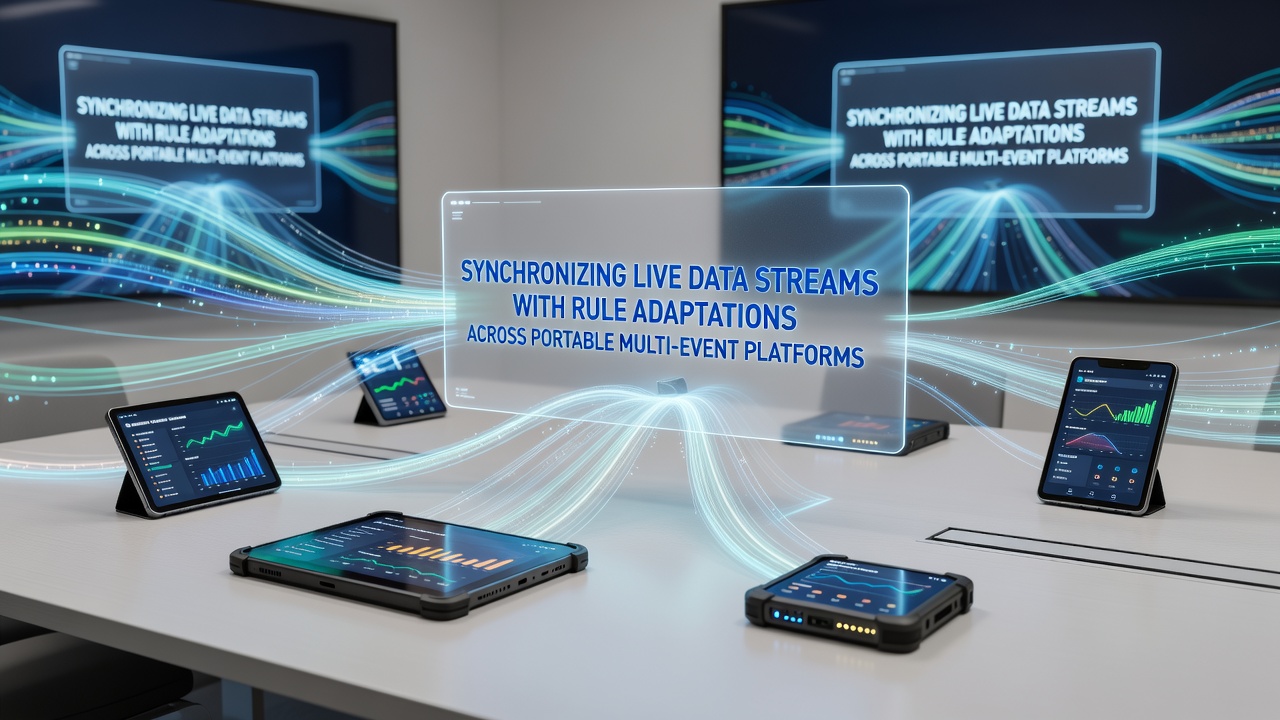
Synchronizing Live Data Streams with Rule Adaptations Across Portable Multi-Event Platforms
Platforms that handle live data streams from multiple events must coordinate incoming feeds from sports matches, table games, and other timed activities while applying jurisdiction-specific rules that shift based on location, device type, and regulatory requirements. Researchers at institutions focused on distributed systems have documented how these systems process continuous updates without introducing latency that disrupts user sessions across portable devices. Data from October 2026 shows increased adoption of edge computing nodes that reduce transmission delays in multi-event environments where several competitions run simultaneously.
Engineers design rule adaptation layers that sit between raw data inputs and the user interface, translating event outcomes into adjusted parameters such as payout structures or eligibility flags. Studies published by the National Institute of Standards and Technology highlight protocols that validate rule changes in real time, ensuring consistency when users switch between events on a single mobile session. These layers detect variations in local regulations and apply them through modular scripts that update without requiring full application restarts.
Core Components of Stream Synchronization
Live data streams arrive from disparate sources including venue sensors, official league APIs, and third-party timing services, each carrying timestamps that require alignment before display. Synchronization engines compare these timestamps against a central reference clock, merging records into unified event timelines that portable applications can render consistently. Observers note that packet loss during wireless handoffs remains a primary concern, prompting developers to implement redundant buffering strategies that maintain continuity when network conditions fluctuate.
Rule adaptation occurs through configuration files that define conditional logic for each jurisdiction, allowing the platform to recalculate displayed values when a user crosses regional boundaries or when event rules receive official updates. According to findings from the European Gaming Standards Association, platforms that separate rule logic from core streaming code achieve faster compliance adjustments during live operations. This separation also supports testing of new rule sets in isolated environments before deployment across active user bases.
Challenges in Portable Multi-Event Environments
Portable devices introduce variables such as battery optimization modes, variable screen resolutions, and intermittent connectivity that affect how synchronized data appears to end users. Research conducted at Carnegie Mellon University on mobile data pipelines indicates that adaptive bitrate streaming combined with local caching helps preserve rule accuracy when bandwidth drops below threshold levels. Multi-event scenarios compound these issues because concurrent streams compete for processing resources on the same device.
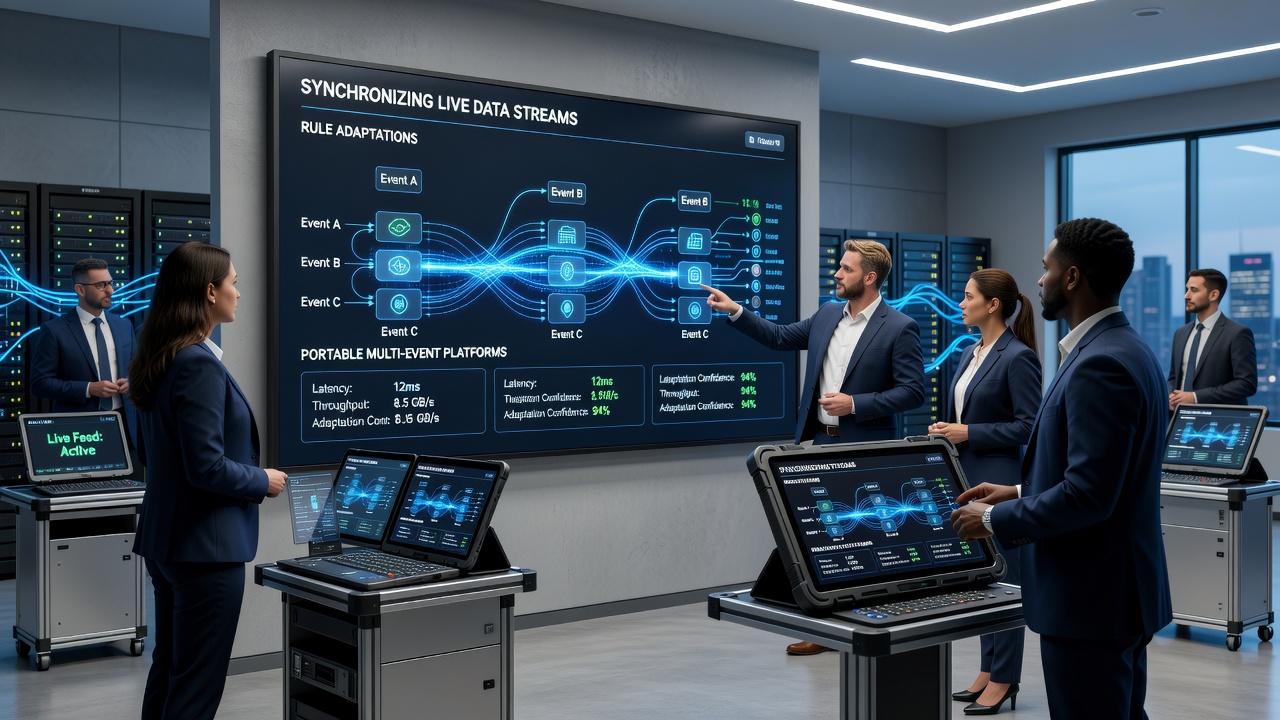
Security protocols must verify the integrity of incoming streams while permitting rapid rule updates, creating tension between encryption overhead and responsiveness requirements. Industry reports from the International Association of Gaming Regulators describe authentication frameworks that sign both data packets and associated rule changes, enabling portable platforms to reject tampered information without halting ongoing sessions. In October 2026, several operators integrated hardware-backed secure enclaves on flagship mobile chips to accelerate these verification steps.
Implementation Patterns Observed in Current Systems
Developers often employ publish-subscribe architectures where event publishers broadcast updates and rule engines subscribe to relevant channels, filtering content according to active user profiles. This pattern allows platforms to manage thousands of concurrent sessions while applying individualized adaptations based on account location and device capabilities. Data collected by the Australian Communications and Media Authority shows measurable reductions in synchronization errors when platforms adopt these architectures at scale.
Testing methodologies include simulated network partitions and rule change injections that measure how quickly systems converge on correct states across all connected devices. Those who have studied production deployments report that automated rollback mechanisms prove essential when a new rule set introduces unexpected calculation discrepancies during live events.
Conclusion
Effective synchronization of live data streams with rule adaptations on portable multi-event platforms depends on coordinated technical layers that handle timing alignment, regulatory logic, and device constraints simultaneously. Continued refinement of these systems supports reliable operation across expanding numbers of concurrent events and user locations.